Group Decision Making


Group decision making ~ it can be so tough!

From little decisions like where the family is going for dinner to significant policy decisions in our schools, it can be a grueling process.

Today, I want to share my all-time favorite tool for group decision making.


First, the group has to define the options. Once that's done, it's simple. The options are written down. Each group member gets a set number of chips (or any small object).

Each group member "weighs in" on the decision by placing chips on their choice of option(s). The beauty of this is, no group member has to choose a single option. Going out to eat, I may be torn between going for Italian or Mexican food. I could put an equal number of chips on both choices.

Once all group members have placed their chips, the chips are added up and the choice most often becomes clear.

I like it so much better than a simple vote - and sometimes trying to reach a consensus just doesn't work.

This can work for groups of students ~ they can "weigh in" to decide what book to read next in a literature circle or what treat to have for a class celebration.

It works beautifully with families, and I think it is also a great option for groups such as policy boards.

Do you have twists on decision making that work for you? If so, I'd love to hear about them!

Thanks for stopping by!    :) Anne
Continue Reading

The Original Snow Cones ~ Sooo Good!


Hi,  The world is covered with a blanket of clean white snow here in Upstate New York today.  

I just had my very favorite dessert ~ homemade snow cones!  Thought I'd share some pictures with you. 

Here's the view from our kitchen. 


We scooped some clean, fresh snow. 

Reached for the raspberry syrup (my favorite). 


Drizzled it on and - yum - it's ready to eat! 


I don't even have words to say how good this is ~ but somebody sure cashed in on the snow cone idea. Trust me, there's nothing like the real thing!  

Happy Holidays and thanks for stopping by.   :) Anne
Continue Reading

Have you seen Literactive? Wow!


So ~ I finally found the free literacy website of my dreams! I just have to share it with you . . . . 

Literactive offers, by far, the best free collection of guided reading books that I have ever seen! I read through each book and each one made me smile. They are well-written with just a little animation added in to hold children's attention.  

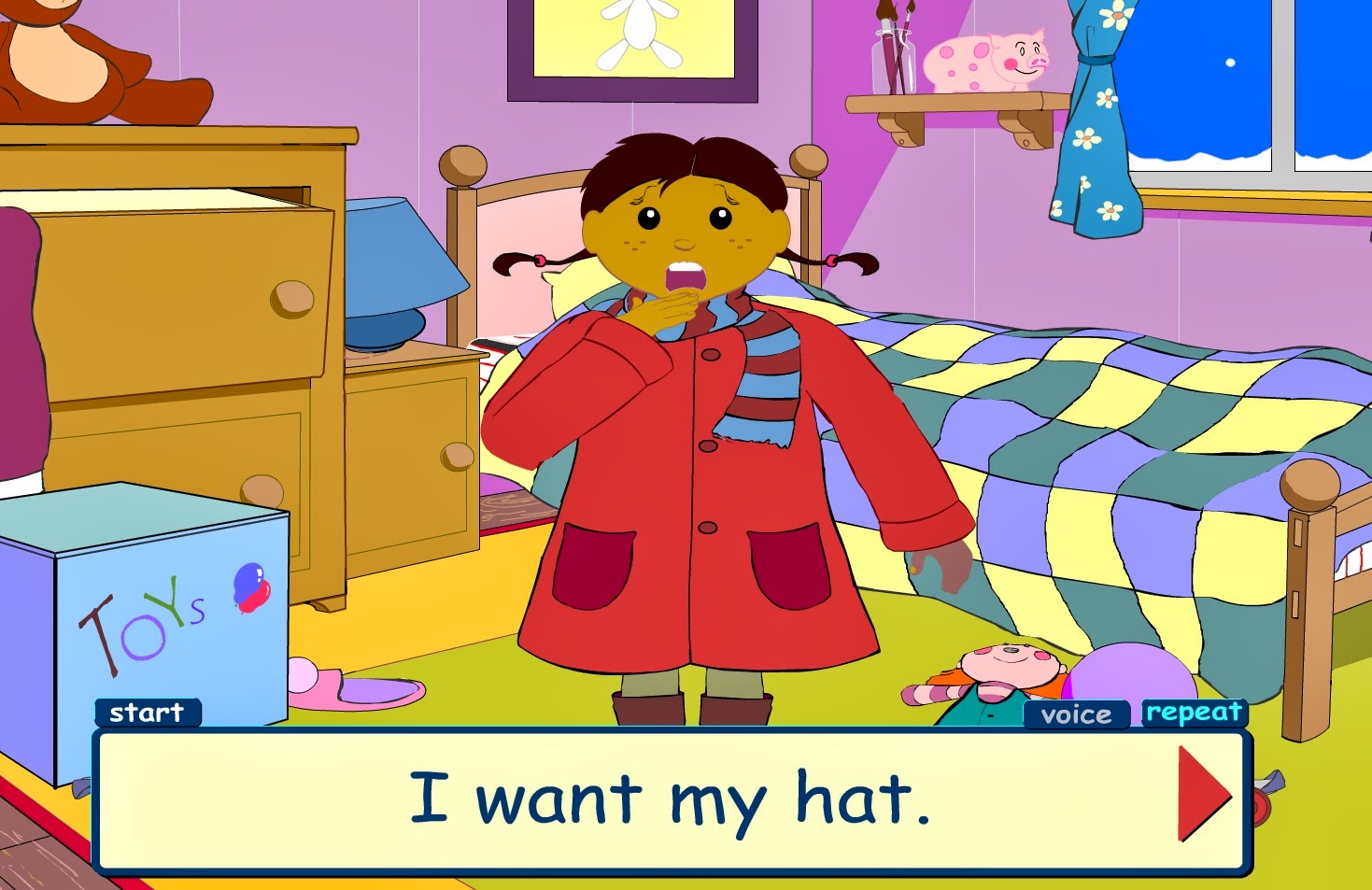
Kids can choose to hear the story read to them, or can read on their own. This picture shows one page from a Level One book.  


Kids can click on a word to hear it read.  If they double click, many words are broken down phonetically for them. 


The books are written for Guided Reading Levels A - E. However, below you will see a book from the Guided Reading Level E section. With the compound words and text structures presented in this text, I am comfortable saying that these books are awesome for the entire first half of First Grade!


There's a whole section called "Learning Activities."  In this section, there are about one hundred games.  I'm still exploring and loving what I see!  The picture below shows a crossword activity that I even enjoy playing. 


There's also a section called "Road to Reading." Click on this road and you will find activities for each letter of the alphabet and nearly every early literacy skill. The picture below shows a sentence building activity. Kids hear a sentence read and then put the words in order to make the sentence.      


Registration is required to access this site.  The process was quick and easy. I received my password within one minute of registering. 

I have to give credit to "Being Inspired" on Teachers pay Teachers for pointing me to this site. I posted on the forum asking for suggestions as I was preparing to share with parents at our Curriculum Night. She pointed me to this site and I am soooo grateful!

Thanks for stopping by. I hope you enjoy exploring this site and that you stop back again soon! I'd also like to invite you to follow along with me at Common Core Connection on Pinterest  where I love sharing ideas that get kids exciting about learning.         

:) Anne
Continue Reading

Number Paths ~ A Fabulous Tool for Kindergarten and First Grade Math!


Number lines are common in primary classrooms - but a number path may be a better tool for many students to use as they work with addition, subtraction and comparison problems. 

A number line uses a model of length. Each number is represented by its length from zero. Number lines can be confusing for young children. Students have to count the "hops" they take between numbers instead of counting the numbers themselves. Students' fingers can land in the spaces between numbers on a number line, leaving kids unsure which number to choose (Fuson et al, 2009). 


1
2
3
4
5
6
7
8
9
10
11
12
13
14
15
16
17
18
19
20

A number path is a counting model.  Each number is represented within a rectangle and the rectangles can be clearly counted. A number path provides a more supportive model of numbers, which is important as we want models that consistently help students build confidence and accurately solve problems.
  
I have been using number paths for a few years and highly recommend them for use in Kindergarten and First grade. 
  
Most major publishers are not yet utilizing number paths. So, I wrote some word problems using number paths. Click here to download the free samples shown below.

Students are presented with multiple ways to solve each problem. Once students are familiar with the ways these sheets support their learning, I often have each student select two ways to show and check their work. This allows each students to utilize the methods that are most effective for him/her. I love to give students time to discuss why they chose certain methods to solve a problem!

Each sheet includes a bonus question. These questions are perfect for extension activities in the classroom or for students to discuss with a family member and complete at home.

Thanks for stopping by and taking a look!  :) Anne Gardner


Continue Reading

Mystery Number Puzzles with Hundreds Charts


A few weeks ago, I saw a picture on Pinterest of a hundred chart that had been cut up and turned into a puzzle. I loved it!

I got to thinking, wouldn't it be great to put a twist on that and turn it into a math center?  Here's what  I came up with . . . 

I started with a few hundred charts copied onto different colors of tagboard. I like to enlarge my charts to 11 x 17 to make them easier to work with.  Just like in the pin I had seen, I cut the charts into puzzles.  

Then, I simply removed some numbers from each puzzle. 


Now, it's set up so kids can put the puzzle together and then figure out (and record) which numbers are missing.  I have kids list the missing numbers for each color.  Voila - a bit of accountability.  


I was lucky ~ I happened to have envelopes the same color as my puzzles.  But, if I didn't, I'd just use ziploc bags and color-code them with a sticker or dot. 

To differentiate, I'm thinking of letting kids who need extra support build directly on another hundred chart.

After kids are confident with this, we'll move on to puzzles using a 120 chart!

For a challenge, kids could have to explain in writing how they know which numbers are missing.  (Another challenge I am considering is having kids find puzzle pieces with one or more lines of symmetry.)   

Hope you enjoy this idea.  Let me know if you think of more twists to add.  Thanks for stopping by and taking a look!   :) Anne
Continue Reading

Harvest Sensory Learning!


Adding a simple sensory component to lessons can bring such joy and engagement!  Here are a few simple ideas for quickly adding a sensory component to early literacy lessons. 

I love doing letter/sound sorts with kids.  In this case, we'd talk about the /p/ sound as in pig and the /m/ sound as in mouse.   Then kids sort the objects - both magnetic letters and "tiny treasures" - onto the letter cards.  

Just hiding the objects in a bin of corn and having kids reach in and take the first thing they touch adds a whole new component!

There's something so appealing about corn.  Ever reach into a bin?   I live in rural upstate New York, where we can just stop by the feed store to pick up a bag of corn.  But, corn from the grocery store works just as well.  (It doesn't take much to fill a small plastic bin.)  

As kids work with sight words, the letters to form a few words can be hidden in the bin of corn. Here's a simple game to play:  
Provide a few word cards. 
Kids reach in, take a letter and place it on the word card.  
When they complete a word, they read it and keep the card.  
Adding a writing component is a snap ~ kids can record the words they "won" in this simple game.  

If you don't have a bag of corn, a bin of rice works just a well!

Did these pictures trigger more ideas for simple sensory experiences that support literacy lessons?   If so, I'd love to hear your thoughts.  

Thanks for stopping by and taking a look!  I'm collecting simple ideas to make learning fun for kids.  I hope you'll check out my Pinterest page and consider following along with me.  :) Anne Gardner


Continue Reading

Fun Ways to Help Young Kids Learn to Answer Multiple Choice Questions

I'm starting to think about helping my kids become confident with the format of multiple choice questions before end of year district and state assessments.  Here are some ideas and materials that I'll be using.    
   
Ask questions in a multiple choice format during daily routines. Here's an example of a simple calendar question. Giving each student a strip of tagboard with a clothespin to pin on their  answer is an easy way to make sure every child participates.


Kids are much more fond of multiple choice questions when they associate them with class rewards! 

Get a small group active by putting letters on the corners of the rug and having kids walk to their answer for multiple choice questions.

During group lessons, pose a multiple choice question and have kids use sign language to show their answer.  So simple!  Here's the link to download: Sign Language for Multiple Choice Questions.


Thanks so much for stopping by.  I hope you find these ideas useful. If you have more ideas for helping kids prepare for multiple choice assessments, I'd love to hear about them!

:) Anne

Continue Reading